Our work is rooted in advocacy, research, and community engagement. We are committed to driving positive change through environmental consulting and collaboration with impacted communities and organizations.
We have supported the San Carlos Apache Tribe in formal tribal consultation with the EPA regarding federal Copper Smelter National Emission Standards for Hazardous Air Pollutants. Through tailored research and data-driven support, we helped strengthen their engagement and ensure their concerns were clearly represented.
In Los Angeles County, we have taken a multifaceted approach to environmental justice. We supported the Lincoln Heights community in partnership with California Communities Against Toxics and the Lincoln Heights Community Coalition. As part of this work, we developed an interactive, publicly accessible map identifying vapor intrusion sites, providing residents with critical information about environmental health risks.
We have also contributed to community meetings, developed materials for peaceful advocacy efforts, and supported alternative land-use proposals to challenge developments that posed risks to vulnerable populations—including projects proposed near Title I schools in areas with high environmental burden rankings.
Additionally, our team has conducted advanced geospatial analysis and created visual tools to support environmental justice leaders. Through planning and facilitating “toxic tours” across Los Angeles County’s industrial corridor, we have helped bring visibility to frontline communities and foster dialogue among stakeholders.
Examples of Our Work
Avenue 35 Lincoln Heights, Los Angeles, CA
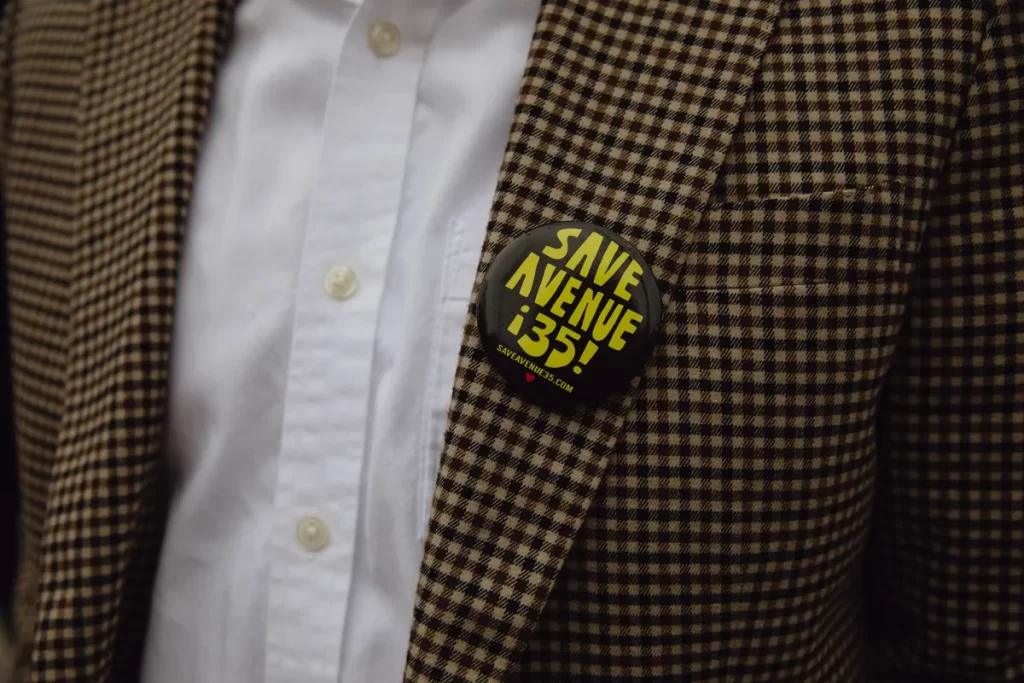
As part of a broader effort to support environmental justice in Los Angeles County, work was carried out in partnership with California Communities Against Toxics and the Lincoln Heights Community Coalition to assist the Lincoln Heights community. A globally accessible interactive map was created to identify and visualize vapor intrusion sites across the region, providing residents with essential information about environmental health risks. In addition, peaceful protest posters were developed in collaboration with local organizers, and participation in community meetings helped maintain ongoing engagement with residents’ concerns. Contributions were also made to alternative land-use proposals for a contested site originally planned for a distribution center—located directly across from several Title 1 schools. Given the area’s ranking in the 97th percentile on CalEnviroScreen for environmental and socioeconomic vulnerability, these efforts supported community advocacy for safer, more sustainable development and helped elevate local voices in the push for equitable urban planning. Find full articles on this communities efforts HERE.

San Carlos Apache Tribe
More than a decade after the statutory deadline, EPA has issued a proposed review and revision of its air toxics emission standards for primary copper smelters under Clean Air Act § 112(d)(6) and § 112(f)(2). There are currently three primary copper smelters operating in the United States. Of these, two are by far the worst polluters. Both are located near the San Carlos Apache Reservation. The Asarco smelter, owned by Grupo Mexico, is located in Hayden, Arizona, less than 5 miles from the Reservation. Freeport’s Miami, Arizona smelter is located less than 8 miles from the Reservation. EPA must issue a new proposal, free from the defects above, that requires the maximum achievable degree of reduction in all the hazardous air pollutants that copper smelters emit, protects public health with an ample margin of safety, and prevents adverse environmental effects.
Major To Minor

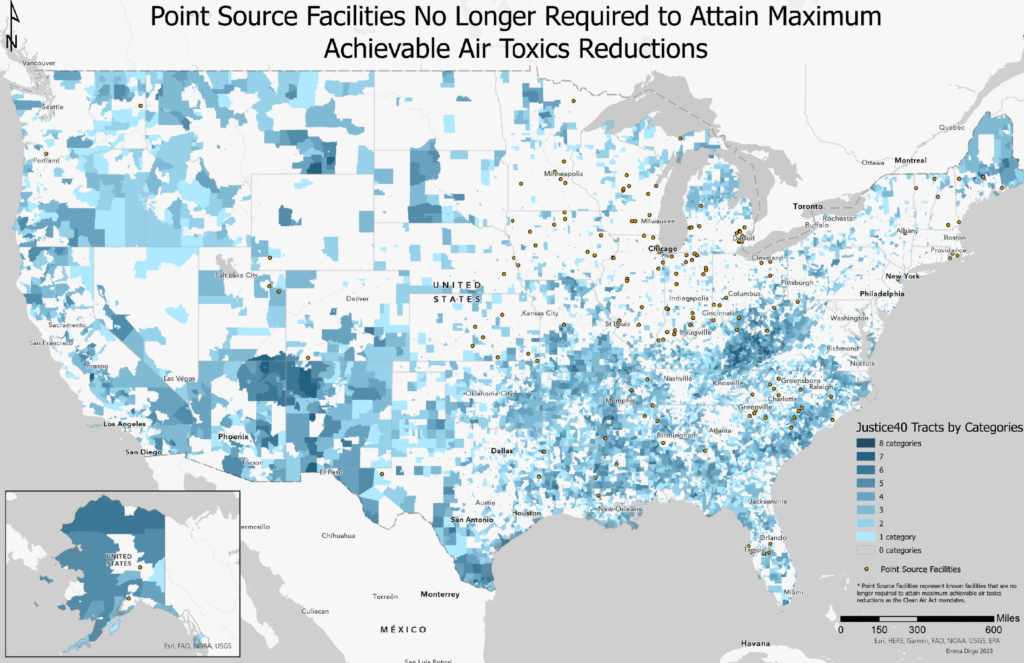
Major source polluters are large industrial facilities that emit high levels of hazardous air pollutants (10+ tons of a single pollutant or 25+ tons combined annually), while minor sources emit smaller amounts and face less strict regulation. Because major sources pose greater health risks—such as respiratory illness and cancer—they are subject to stricter federal controls like MACT standards.
The maps highlight facilities that were proposed to be reclassified as “minor” despite still emitting high levels of pollution. This change would have weakened environmental protections under the Clean Air Act. By showing where these polluters are located, especially in vulnerable communities, the maps served as a powerful tool to illustrate the risks and support environmental justice advocacy.
Clean Air Act Infringements
The Clean Air Act is a landmark federal law passed in 1970 (and amended in 1977 and 1990) that regulates air emissions from both stationary sources (like factories and power plants) and mobile sources (like cars and trucks). Its main goal is to protect public health and the environment by reducing air pollution, including pollutants that cause smog, acid rain, and serious health issues like asthma, lung disease, and cancer.
One of the most important parts of the Clean Air Act is the requirement that major sources of hazardous air pollutants use the Maximum Achievable Control Technology (MACT) to limit emissions. MACT standards are the strongest pollution controls available and are meant to ensure that industries do everything possible to reduce toxic emissions. If facilities that still emit high levels of pollution (like 25 tons or more of hazardous pollutants per year) are no longer required to follow these strict controls, it would be a serious infringement on the Clean Air Act. It would undermine the very purpose of the law—to protect air quality and public health—by allowing polluters to avoid responsibility. Rolling back these requirements weakens environmental protections, disproportionately harms low-income and marginalized communities, and sets a dangerous precedent for future deregulation.